
Over the past months, a lot has been happening behind the scenes at LibrePlan.
FOSDEM 2026 – Volunteering at the Archive
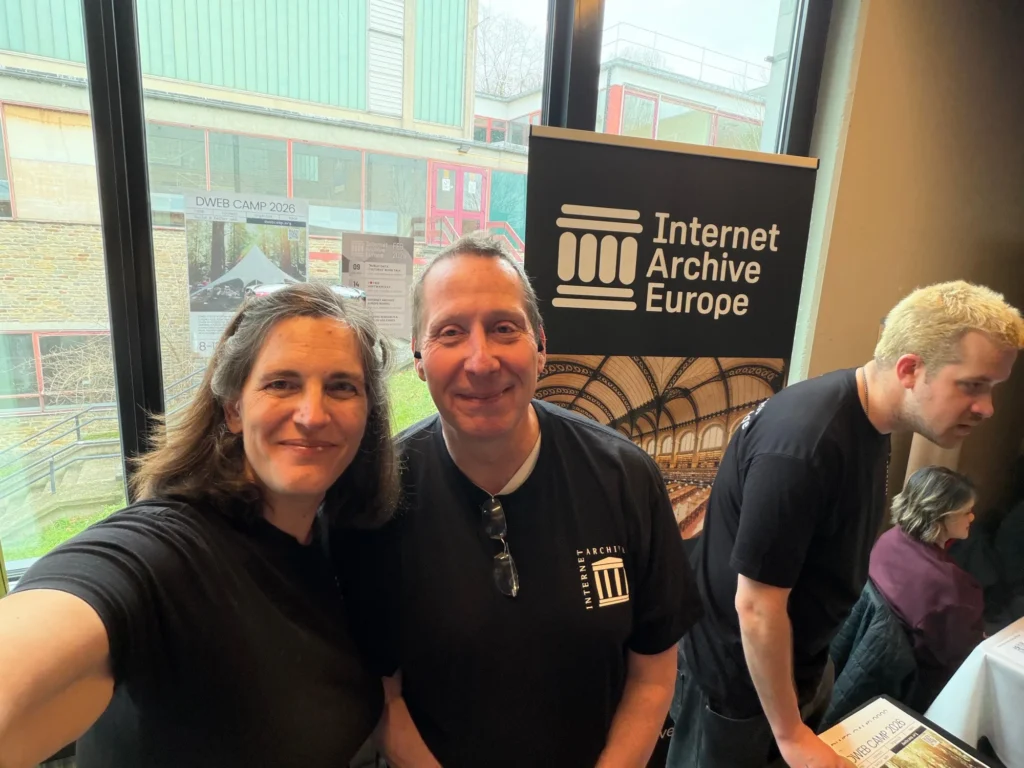
We attended FOSDEM this year — not with our own booth, but as volunteers at the stand of the Internet Archive Europe Foundation.
Of course, we would have loved to host a LibrePlan booth ourselves. But let’s be honest: at this stage, we’re still a bit too small for that. And that’s okay. Being part of the broader open-source ecosystem, supporting fellow initiatives, and talking to people about sustainable digital infrastructure is already incredibly valuable, and also a lot of fun!
FOSDEM always reminds me why projects like LibrePlan matter: open, transparent, community-driven software is not a luxury — it is essential infrastructure.
A New Volunteer Joins the Crew
Fantastic news: our team has grown again.
We warmly welcome Santiago, a highly experienced Java developer who has decided to contribute his expertise to LibrePlan. Having strong Java knowledge in the team is a huge boost, especially given the architectural history of the project.
Open-source projects live and breathe through volunteers. Every new contributor strengthens the foundation.
Welcome aboard, Santiago.
Modernizing the Codebase (and Surviving Java 9)
On the technical side, I’ve been working on modernizing parts of the codebase.
Today’s mission: replacing the _ function, which became illegal starting with Java 9, with _t.
What used to be a harmless identifier has long since become reserved. These are the kinds of changes that are conceptually simple — but potentially tedious in practice.
Surprisingly, the migration (1541 files) took about three hours.
The interesting part? Roughly 95% of the changes were executed within 15 minutes with the help of vibe-cli from Mistral AI — many thanks to the Mistral team for building such powerful tooling.
A Word on “Vibe Coding”
Vibe coding has developed something of a questionable reputation. And to some extent, that criticism is understandable.
The problem isn’t the tools.
The problem is the illusion that programming has become effortless — that anyone with a few brain cells can now build robust systems without understanding what they’re doing.
That is simply not true.
Working with AI as a developer feels much more like a dialogue than automation. You need to:
- Know what you are asking.
- Describe your intent precisely.
- Understand the system well enough to validate the result.
- Review every change critically.
I experience it as captaining an ocean-going vessel.
The ship — powered by AI — will move forward regardless. It has enormous momentum. But it is the captain’s responsibility to determine the course, make corrections, and ensure the destination is reached safely.
When that dynamic works, you get a remarkably powerful combination.
What’s Next?
The commits reflecting these modernization efforts will appear in the repository soon.
For now, I’m heading back to the bridge.
There’s still some steering left to do.